

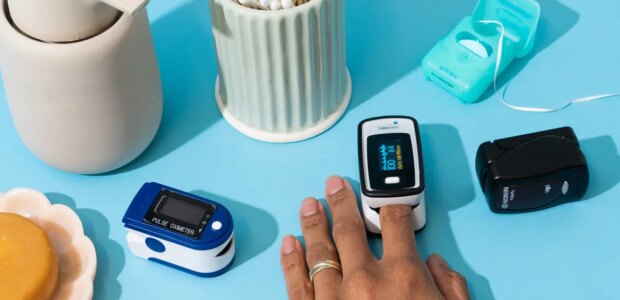

Because of deadly problems that came to light during the COVID-19 pandemic, the FDA is currently evaluating its guidance on pulse oximeters. The FDA has acknowledged that pulse oximeters have limitations, especially for people with darker skin tones. The theory is that darker pigmentation of the skin can interfere with a pulse oximeter’s light, and that pulse oximeters have not been designed and calibrated to account for that.To address these concerns, the FDA in January 2025 published draft guidance for device makers, with proposals focused on pulse oximeter performance testing, labeling, and premarket submission recommendations. The agency has also proposed creating an online repository, including all FDA-cleared pulse oximeters intended for medical purposes “that demonstrate comparable performance across skin pigmentations,” according to agency review of manufacturer-submitted data. (Such a repository would not include pulse oximeters intended for recreational or wellness purposes.)“Our draft recommendations are based on the best available science to help address concerns of disparate performance of pulse oximeters based on an individual’s skin pigmentation,” Michelle Tarver, director of the FDA’s Center for Devices and Radiological Health, said in a statement. The agency is considering public comments on the draft guidance before finalizing it.Anesthesiologist and Open Oximetery member Michael Lipnick called the new draft guidance “a great step forward,” but noted that these recommendations pertain to a relatively small number of commercially available devices. Even considering only clinical-use oximeters, Dr. Lipnick added, “there remain many loopholes and nuances in the guidance that altogether mean devices still can have bias related to skin pigment and make it to market.”Dr. Tom Valley, a pulmonary and critical care physician and an assistant professor of medicine at the University of Michigan, said he found the FDA’s new draft guidance on pulse oximeters encouraging. But he stressed the success of any final guidance would depend on several factors, such as potential FDA enforcement.The accuracy of pulse oximetry is crucial. Its results can determine whether a patient, such as someone with asthma or another lung disease, receives care, medical intervention, or coverage through their health insurance. If pulse oximeters overestimate a person’s blood oxygen levels, that person may be denied the necessary health care.“Consumers need to be aware of any limitations of devices they’re using, especially if they’re using it to assess their health,”—Dr. Noha Aboelata, founder and CEO of Roots Community HealthThat became the case during the COVID-19 pandemic. Researchers at the University of Michigan in 2020 found that fingertip pulse oximeters showed inaccurate results for some Black patients; this was especially problematic when overwhelmed hospitals had to send patients home to recuperate from COVID-19. The team reported that pulse oximeters were three times more likely to overestimate the blood oxygen levels of Black patients, making it more difficult to detect hypoxemia, so some people were less likely to receive needed treatment.More recently, a 2026 study in England involving 903 patients found that pulse oximeters overestimated blood oxygen levels for people with darker versus lighter skin tones. A 2024 US study of 11 pulse oximeters on people with a range of skin tones also found that most of the devices showed “a trend toward worse performance in participants with darker skin pigment.”Open Oximetry is continuing to test the accuracy of pulse oximeters on people with varying skin tones, including expanding its research to Uganda. And a Johns Hopkins review of FDA material found that most manufacturers aren’t complying with the FDA’s guidance to test their devices on a diverse group of people.In November 2023, plaintiffs from Roots Community Health Center, in Oakland, California, filed a lawsuit against pulse oximeter makers and retailers such as Masimo, ChoiceMMed, and Walgreens. Its published analysis of COVID-19 treatment highlighted the disparity between Black and non-Black patients during the pandemic, pointing out delays with care. An August 2026 trial is scheduled.Roots called on pulse oximeter makers to refine their technology so that people with all types of skin tones can expect to receive accurate results. In the meantime, it also demanded that manufacturers and retailers include a warning label on their packaging.“Consumers need to be aware of any limitations of devices they’re using, especially if they’re using it to assess their health,” said Dr. Noha Aboelata, founder and CEO of Roots Community Health. “Not knowing about this can have disastrous outcomes and it has had disastrous outcomes already.”Medical staff, hospitals, health insurance companies, and others also need to reconsider how they use pulse oximeters as a diagnostic tool.“The technology needs to be fixed,” Aboelata said.In a 2025 letter to the FDA, Aboelata called the agency’s new guidance “inadequate.” Among other things, she pointed out, the guidance does not require companies to include warning labels on their products.“Until pulse oximeters are redesigned … it is incumbent upon the agency to require labeling of pulse oximeters that adequately targets and warns persons with darker skin pigmentation about pulse oximeter flaws,” Aboelata wrote. “Failure to do so unreasonably endangers public health and safety.”For now, people with darker skin tones should be more skeptical of results from a pulse oximeter, said Dr. Valley, who co-authored the 2020 research letter. People with darker skin should consider using a higher SpO2 threshold for seeking medical care, and they should not necessarily be reassured by a “normal” reading, he said, especially when they’re feeling poorly.“Pulse oximeters are still a valuable tool. I still use them every day,” Valley said. But “we need to acknowledge that these devices are imperfect, and they may be more imperfect for certain people.”
Source link