


With summer just around the bend, AC units are already abuzz.
But as outdoor temperatures rise, what is the best temperature setting for the thermostat during the warmer months? And what are some ways to keep the ever-growing electricity bill down?
The U.S. Department of Energy recommends keeping indoor temperatures comfortable, at a level that provides humidity control, while keeping the difference between indoor and outdoor temperatures low to save money.
You can save up to 10% a year on heating and cooling by adjusting your thermostat 7 to 10 degrees for eight hours a day — raising it in summer and lowering it in winter.
What Temperature Should You Set Your Thermostat to in the Summer?
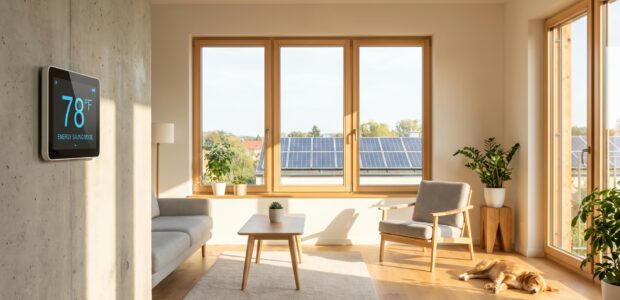
Though the ideal temperature may vary depending on where one lives, 78 degrees Fahrenheit is the recommended average, according to several energy companies, including Chicago’s Constellation, New York and Massachusetts’ National Grid and Florida’s Carrier.
Going Away? Keep the House Warmer
The Department of Energy recommends keeping a home warmer than normal when away to avoid unnecessary air conditioning use. A programmable thermostat allows homeowners to start cooling down the home before they return.
Use Fans Smarter, Not More Than Necessary
During the summer months, fan blades should spin counterclockwise. Spinning this direction, the fan creates a cool breeze by pushing air down, the HVAC manufacturer Trane website says.
Ceiling fans should be turned off in a room not in use. Fans cool people, not rooms by creating a wind chill effect, the DOE advises. And when taking a shower or bath, use the bathroom fan to remove heat and humidity.
Schedule Regular Maintenance
The DOE also encourages homeowners to schedule regular maintenance to ensure cooling systems and appliances are working efficiently.
Before calling a professional, there are some do-it-yourself maintenance tasks homeowners can knock out:
Vacuum air intake vents regularly to remove dust buildup.
Keep an outside air conditioner unit free of airflow obstructions by at least 2 feet.
Ensure furniture isn’t blocking airflow registers.
Add caulk and/or weatherstripping to seal air leaks around doors and windows.
Consider lighting options that operate at cooler temperatures, such as using LED lightbulbs.
Avoid placing electronics near air conditioning thermostats, as the thermostat senses heat from these appliances and may cause air conditioning to run longer than necessary, the DOE states.
Other Tips for Saving Money on Summer Cooling Bills
Here are some more tips for how to save money on an AC bill this summer:
Install window coverings to prevent heat gain through windows during the day.
Avoid setting a thermostat to a colder setting than normal when first entering a space. It doesn’t cool the space any faster and can result in excessive, unnecessary expenses.
Wash full loads of dishes and clothes for efficiency.
If reasonable, open windows and turn off air conditioning at night to let cooler air in, then shut the windows and shades in the morning to trap the cool air inside, Trane recommends.
Greta Cross is a national trending reporter at USA TODAY. Story idea? Email her at [email protected].