


Quick Fixes: What You Can Do Right Now to Prepare for a Storm
Hurricane season is just gearing up. Are you ready for the next big storm?
Immediate fixes like clearing your yard of debris, securing windows and doors, and cleaning out your gutters can help prevent major hurricane damage to your property – and you can do them this weekend.
Meanwhile, some bigger home projects, like installing impact-rated windows or reinforcing your roof, can also be worth the investment in the long run.
Here’s what you need to know ahead of the next big storm, so you aren’t caught off-guard.
By the time the National Hurricane Center announces a hurricane watch or warning in your area, you typically only have a day or two to prepare. Luckily, there are several precautions you can take right away to make sure you’re ready when a storm hits.
Secure Windows and Doors
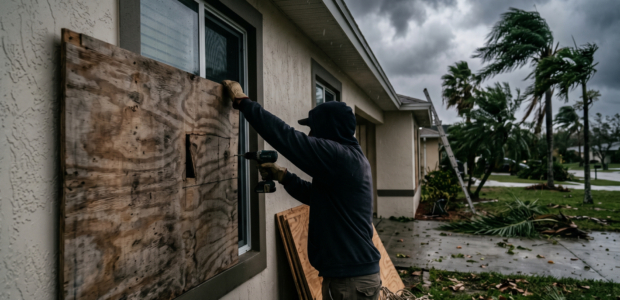
Securing your windows and doors helps block debris from shattering the glass. A broken window can cause severe wind and water damage and, in serious cases, sudden pressure changes that blow your roof off.
When prepping, make sure you’re securing glass windows and doors properly, not resorting to makeshift solutions. “Taping a large ‘X’ on windows does little to protect them from wind or flying debris,” says Joanne Carmody, vice president of catastrophe management at Travelers Insurance.
Instead, she recommends installing permanent storm shutters or boarding up windows with marine plywood cut to fit the window frames.
Clear Your Yard and Eliminate Projectiles
Unsecured outdoor furniture, trampolines and other loose items can become airborne during a hurricane, causing damage to you or your neighbor’s home. Take them inside or anchor them.
Also check for dead tree limbs or branches overhanging your property and have them removed, so they’re not at risk of falling onto your property.
Clean Gutters and Check Drainage
Clearing your gutters and checking that drainage systems work properly are important but commonly overlooked steps when preparing for a storm.
“Clogged gutters, blocked exterior drains, damaged downspouts and sump pumps that are not working properly can all contribute to significant water damage during heavy rains,” Carmody says.
Understand Insurance Coverage and Document Belongings
If your home is damaged during a hurricane, dealing with insurance can be a pain. One way to expedite the process is by preemptively taking photos and videos of each room in your house, including valuable items and your home’s exterior. This can make it easier to verify your claim and be reimbursed if damage does occur.
Homeowners might also want to check that their homeowners policy is up to date and verify what’s covered, as many standard policies do not cover flooding and some types of water damage.
Prep Emergency Supplies and Create a Plan
In the case you need to leave your home during a hurricane, talk with your family about where you’ll go. “Familiarize yourself with your county’s evacuation plan, so you know your evacuation zone, designated routes and shelter locations,” says Abbey Bouchard, insurance broker and VP client advisor at Marsh McLennan Agency.
Filling your car’s tank up with gas and preparing an emergency kit with basics like bottled water, flashlights and non-perishable food can also help if you need to leave on short notice.
Long-Term Upgrades That Can Protect Your Home
Structural upgrades to your home’s roofing, windows and drainage systems offer long-term storm protection and can prevent serious damage down the line.
“Preparing your home for severe weather should really be viewed as a long-term investment,” Bouchard says. “In fact, some insurance carriers offer incentives for homeowners who have taken measures to harden their homes.”
Reinforce or Replace Your Roof
“From shingles being blown off, to flying branches impaling them, to entire roofs being blown off, roofs can be very vulnerable,” says Andre Kazimierski, co-owner of HomeHero Roofing. He explains that roofs are one of the most commonly damaged parts of a home after hurricanes or high winds. Kazimierski recommends replacing your roof with a more durable material, like metal. Other reinforcements, like adding hurricane straps to your rafters, retrofitting soffits and bracing roof trusses, can further reduce your risk of structural damage.
Even if you don’t have the ability to complete a significant roof repair or replacement, securing any loose shingles before a storm can minimize damage.
Upgrade Windows, Doors and Garage
Windows and doors can be vulnerable points in your home during a storm. “Protect the openings,” says Phil Adkins, president of Adkins & Sons, a window replacement company based out of southeast Michigan. “A storm does its worst damage once it can enter the home. Most damage begins with a failed window or door.”
One option to reinforce windows and doors is installing impact-rated hurricane windows. “A regular window shatters, whereas a hurricane window may crack, but it holds together,” says Adkins. You can also install storm shutters on your current windows.
Garage doors are another common vulnerability. “It is the largest opening in the house and often the weakest,” says Adkins. “A failed garage door is one of the fastest ways to lose a roof entirely.” You can reinforce yours with a hurricane brace kit or upgrading to a wind-resistant door.
The Bottom Line
While larger upgrades like upgrading your roof and storm windows can offer long-term protection in the case of a hurricane, there are several steps you can take today to be ready for the next big storm. Start with having a plan in place, securing windows and potential projectiles, and reviewing your homeowners insurance.
“Preparation before a hurricane can have a significant impact on how well you weather the storm and recover afterward,” Carmody says.