


Welcome to “Hair Me Out,” where we pull up a chair with the industry’s top hairstylists, scalp experts and hair-care authorities to talk shop, myths and everything in between — including their hottest takes, most controversial opinions and the hard truths the industry doesn’t say out loud enough.
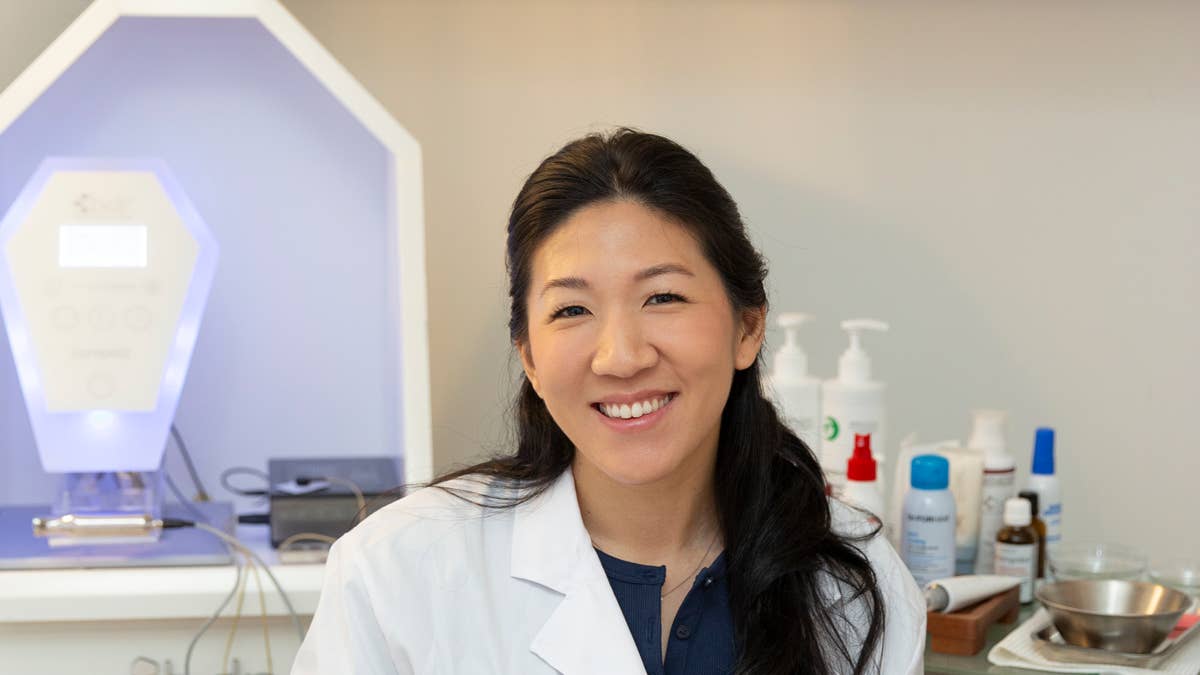
As evidenced by an influx of Korean hair-care brands like Dr.Forhair expanding to the U.S., scalp care has become the latest frontier in the “skinification” trend infiltrating every corner of the beauty industry. Christina Kim, a licensed esthetician specializing in Korean skin and scalp care, serves as Dr.Forhair’s scalp expert-in-residence while also managing Dupï Studio, a New Jersey- and New York-based salon offering Korean holistic treatments that she launched in 2023. At Dupï Studio (“dupï” means “scalp” in Korean), Kim embraces the “skinification” of scalp care via her signature scalp facials, which are rooted in lymph and fascia care to release tension, stimulate circulation and restore balance to the scalp.
Kim’s scalp-care specialization stems from a personal place: She experienced hair loss, hormonal migraines and skin challenges after having three children, but couldn’t resolve her concerns via conventional treatments. Now, rather than treating the scalp as a mere extension of the hair, Kim follows in the footsteps of longstanding Korean scalp-care experts by approaching the previously underserved area as what it really is: a skin barrier.
Ahead, Kim shares her ideal scalp-care routine, why the hair training trend “needs to go,” the drawbacks to sleeping with wet hair, her most controversial hair-care opinion and more.
How often would you recommend that people wash their hair?
When it comes to hair washing, I feel like there’s no perfect answer. It’s different based on every single person’s needs and goals. If you are more on the dry side or you’re struggling with dandruff, even flaky skin, seborrhoeic dermatitis, I recommend usually washing your hair every max two, three days. I think if you’re on the oilier side, you’re working out every day and you’re also putting in product like dry shampoo, you have to be washing it at least daily. So it depends on each person, but I would say a safe bet is one to three days max. I wouldn’t push it to a week.
What are some common scalp concerns that you see?
A lot of my clients are actually seeing dehydrated scalps, so we’ve been really stripping the barrier of the scalp. When you think of the scalp, we always focus on just removing. We’re not really thinking of replenishing. And so I’m seeing a lot of imbalance in the scalp….And then also I’m seeing honestly a lot of hair thinning. I think more and more clients are also seeing it as a younger demographic. They’re starting to see a lot of their temples and the crowns. We’re seeing a lot of that density go away.
What are some ways that we can actually treat those concerns?
Obviously, there are prescriptions like Minoxidil. I’m seeing a lot of clients [whose] age [ranges] from teens even to older generations. Minoxidil is a big thing that I’m seeing topically and orally, but also I think when it comes to scalp facials and then having the right home care, it’s very important.
Photo: Courtesy of Dupï Studio
What would you recommend as the perfect scalp-care routine?
I recommend always having something like a comb or a stimulator. I like our gua sha comb, but there’s also different tools out there now that you could treat the scalp. Stimulation is key for blood flow, and that will help with new growth. So I recommend something like a tool, like a comb, and then a serum or a topical mist. If you’re able to incorporate both of those things, every day — ideally, I like morning and night — but if you’re not able to do it because of time or you just forget, I like to leave it by your toothbrush and just remember to do it at least once a day right before you go to bed and it feels really good.
What is one misconception that you hear about scalp care?
I think one of the bigger misconceptions I see, and also it might be a trend, is ‘hair training,’ [when people stretch the time between washes to ‘train’ their scalps to produce less oil]. Hair training or scalp training became popular during Covid [19’s lockdowns] because everyone was home and they’re not going out or having to see people, but ‘scalp training’ is very bad for your scalp health.
You’re allowing all of that oil and sebum to just constantly grow on the scalp and it’s causing your scalp to also get inflamed. Inflammation is one of the biggest reasons why we’re seeing all of this hair thinning happening and hair loss and also dandruff.
What is one thing that you think people get wrong when caring for their scalp?
I think one of the things that people really get wrong when it comes to scalp care is that you’re just stripping the barrier. When it comes to scalp care, a lot of times it’s just shampoo, rinse, condition your ends, and then you’re done. Also, if you’re not actually taking care of the barrier, even causing too much oil to produce, like people who go to sleep with their hair wet and they always wonder why no matter what they do, no matter how many times they wash it, their hair is greasy.
A lot of that has to do with the scalp barrier, so I would say the bigger misconception is not treating your scalp like a skin barrier and just really just stripping it or allowing all this oil to produce.
Photo: Courtesy of Dr.Forhair
What is one beauty “rule” that you think is made to be broken?
Probably sleeping with your hair wet. It’s okay to leave your mid-[lengths] to ends a little wet, let it air dry. But when it comes to your scalp, you want to make sure that it’s fully dry. I like to recommend fully drying your scalp and then doing a cool shot just to make sure the scalp itself is dry.
What is your most controversial beauty opinion?
I know it’s a little bit polarizing, but I don’t mind dry shampoo. I’m a working mom. I have three kids, so it’s crazy busy and there are days sometimes where I skip a hair wash day and I’m not going to leave the house with greasy hair. I actually like powder forms. I don’t love the aerosol. So I think dry shampoo is fine, but if you are going to apply dry shampoo, you want to make sure that that night you’re washing your hair.
What excites you right now about the hair- and scalp-care industry?
I think it’s great that the scalp is not being treated as an afterthought. Right now, especially in Korea, they have had centuries’ worth of research when it comes to scalp care. Scalp is a part of people’s wellness routine just as much as you would go to the gym or go get a facial. I love that right now in the industry in the States, we’re actually treating the scalp like a skin barrier. It’s like the skinification of scalp. I love seeing that people are taking it more seriously and realizing that a lot of their skin concerns also stem from the scalp.
Please note: Occasionally, we use affiliate links on our site. This in no way affects our editorial decision-making.
Fashionista’s audience includes 1 million site visitors, 110,000 newsletter subscribers and 4.74 million social media followers. Want to know how to reach them? Learn more.
Source link