


Editor’s Note: This story originally appeared on Live and Invest Overseas.
In 2015, Lief and I went shopping for a rental apartment on Portugal’s Algarve coast.
After eight years of economic crisis, this country was at a bottom, but we believed it was turning the corner.
We explored beach towns and villages from Tavira to Ferragudo, every one charming.
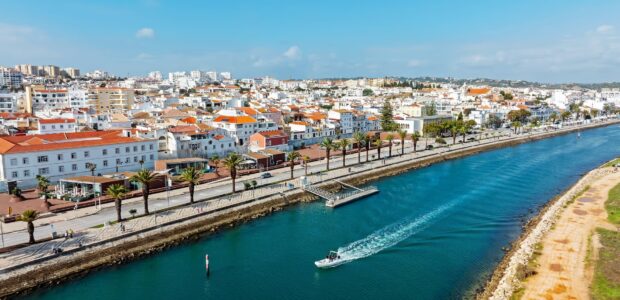
It was Lagos that grabbed our attention. Its cobblestoned square marked off by brightly tiled buildings that’d stood their ground for centuries drew us in. We like places with long histories, and Lagos has 2,000 years of it. The seaside city came into being originally as a Phoenician-Carthaginian trading post.
Finding an investment property
We toured six properties and liked one in particular.
It was at the top of a narrow winding pedestrian pathway off the main square. Just a three-minute walk to the center of town but removed enough to be quiet and private.
This would be an investment purchase. Still, we always prefer to buy something we like. That way, worst case—if the market, the yields, the value, and the currency all manage to move against us—we’re left with a property we can take enjoyment from personally.
Yes, we told ourselves as we stood on the rooftop deck soaking up the ocean view, investment outcome aside, we’d look forward to every chance to return to this spot.
The location and the property checked our boxes, but what tipped the scales for us were the undervalued price and the motivated seller.
We intended to make the apartment available for short-term rental. The market in Lagos is active through three seasons. Tourists are thin on the ground come winter, though we’d likely find renters for Christmas and New Year’s willing to pay a premium.
Projected returns
Our math, based on data from both our real estate agent and our own market research, projected a net annual return of 8%. Our general net yield expectation from a rental anywhere is 5% to 8%. Another box checked.
We made an offer and proceeded with the purchase.
During the four years we owned the property, we visited four times.
During those stays, we’d wander the coastline, explore the old fort, take day trips north and south, and, as often as possible, linger in the Praca Gil Eanes at the end of our lane. Indeed, this was where you could find me most afternoons enjoying a glass of prosecco al fresco as the sun set and the restaurants set out boards advertising that evening’s specials.
Upon arrival for each visit, we’d withdraw some of the euro cash accumulated from apartment rent paid into our Portugal bank account. Then we’d use that money to cover our expenses. It was like a series of free holidays in a 15th-century town.
In addition to vacation mad money, the rental cash flow covered all expenses associated with the apartment and left us with a nice-sized and steadily growing euro nest egg.
The rental return met our 8% projection the first year and hit our 5% to 8% mark each of the four years we owned it, based on the original purchase price. The problem, if you want to call it that, was that markets across Portugal, including in Lagos, appreciated quickly after this country turned its crisis corner.
Time to sell
During a visit to Lagos four years after our purchase, our agent friend on the ground — the one who’d helped us find the apartment in the first place — suggested we think about selling.
“I’m certain you could get more than twice what you paid,” he told us.
We didn’t believe him at first, but two other local agents concurred. Calculated on the much higher valuation, our net rental return was less than 3%. At that yield, we’re sellers rather than buyers.
All real estate in the Algarve appreciated over the four years we owned our Lagos apartment, but our apartment more than doubled in value. Part of the reason was the location and the type of property. It worked as a rental, but it was also comfortable for full-time living.
In addition, the place had a charm factor that set it apart. It wasn’t one of the cookie-cutter beach-resort condos you find along this coast. That je ne sais quoi element was part of the reason we’d bought in the first place.
This is not a data point you can enter into your spreadsheet when shopping, but it is a critical point to remember when comparing potential purchases.
Building a portfolio of cash-flowing properties overseas is a chance to make money and build wealth, yes, but it’s also a chance to improve your lifestyle. Remember that — sometimes even prioritize that — when making investment choices.
The exchange rate between the euro and the U.S. dollar didn’t move much over the four years we owned the property in Portugal, but it could have and it sure has since.
This is another reason it’s better to buy in places where you want not only to make money but also to spend time. We were happy to spend the euros we were earning locally, meaning we were insulated against potential currency downside. It didn’t matter to us if the euro lost ground on the dollar, because we weren’t converting our euros into dollars. We were spending and accumulating them in euroland.
Likewise, when we sold that apartment, we kept the proceeds in euros, ready for our next EU investment.