

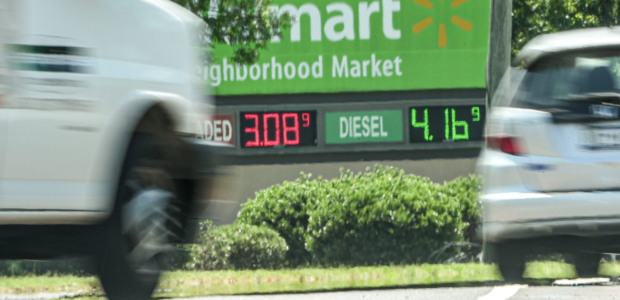

Gas and oil prices fell June 18 the morning after U.S. and Iranian officials signed a memorandum of understanding aimed at ending the war between the two countries, a welcome development for Americans preparing for summer travel after facing higher costs at the gas pump over the last three months as a result of the conflict.
The national average for a gallon of regular gasoline sits at $3.99, down from $4.52 last month, but still up from $3.19 this time last year, according to AAA. Brent crude oil, the global standard, has dropped below $78 per barrel, its lowest level since early March. The war began Feb. 28.
“Now that the oil is coming down, you’re going to see everything follow,” President Donald Trump said during remarks at the G7 Summit. “Everything follows the cost of energy.”
However, analysts say it will take time before shipping in the Strait of Hormuz, which typically carries 20% of the global oil supply, returns to pre-war levels.
Will Gas Prices Continue to Fall?
Patrick De Haan, head of petroleum analysis at GasBuddy, said in an X post on the evening of June 17 that after 100 days of tracking oil’s ups and downs, he hopes “flows will slowly return to normal” and that “the worst is behind us.”
In separate posts, he said he expects the national average price of gasoline to head toward $3.70 per gallon, and “if everything goes well” he predicts it could fall below $3 per gallon later this year.
That’s good news for the 67.2 million Americans AAA projects will travel at least 50 miles by car or plane for trips celebrating the Fourth of July. A LendingTree survey published June 15 found 75% of Americans said higher gas and airfare costs have already affected their summer travel plans.
But Americans are feeling a bit more hopeful. The University of Michigan’s measure of consumer sentiment rose 9.2% this month after hitting an all-time low in May. While it’s still down 19.4% over the year, Surveys of Consumers Director Joanne Hsu said June’s spike in sentiment was thanks to consumers experiencing some relief at the gas pump.
“We’re coming down from the highs, because with the memorandum of understanding, it looks like the Strait of Hormuz will be open faster than otherwise,” Wayne Winegarden, a senior fellow in economics at the Pacific Research Institute, said. “That’s providing relief from where we were, but I think it’s very important to recognize that that’s different than getting back to where we were in January.”
Expect ‘Bumps in the Road’
Oxford Economics analysts said the agreement between the U.S. and Iran is “a significant step” but that “there will likely be bumps in the road, and it will still take time for shipping in the Strait of Hormuz to approach pre-war levels.”
While Trump promised June 17 that the strait would be opened immediately, shippers still face several challenges including high insurance costs and uncertainty over their ability to travel safely through the waterway where Iran deployed sea mines.
“How wide is the channel is still an open debate, and that’s probably going to take several more weeks to ensure that that’s not a problem,” Truist’s Head of U.S. Economics Mike Skordeles said, adding that Chinese ships managing to traverse the strait will be a key indicator. “The U.S. Navy — not to say they’re going to take more chances — but they’re not as concerned as, and they’re more sophisticated than, a plain Jane oil tanker from China. That oil tanker with 2 million gallons of crude oil isn’t going to take a chance, so they’re going to be very cautious.”
Supply chains don’t snap back instantly. Companies that paid more for crude oil over the past few months are still working through that higher-cost inventory, and they’re likely to keep passing some of those costs on to consumers, even if oil prices are dropping right now. Skordeles said he wouldn’t be surprised if inflation continues to run a bit hot in June, July, August and perhaps even September.
Winegarden said even if inflation eases, it won’t mean Americans’ affordability problem will go away.
“Prices are going to still be above where they were at the beginning of the year, and so that kind of discrepancy, in terms of what the economic news is going to say, but what people are going to feel, I think, is very important to recognize,” he added.