

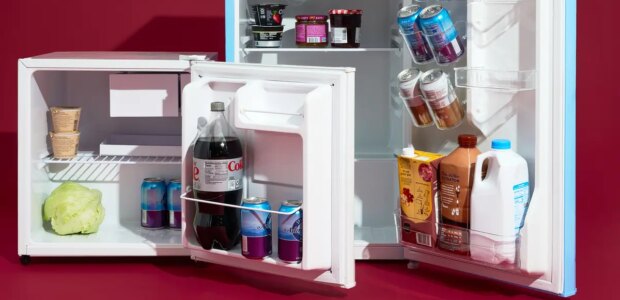

We considered mini fridges in an array of sizes and price ranges, from affordable, no-frills models to larger units with more-elaborate designs. Ultimately, we focused on cube mini fridges and tall mini fridges (with and without separate freezer doors). Here’s how we evaluated them:Food and drink storage: We stored seltzer cans, quarts of milk, and frozen meals for a week or two at a time and tracked how well chilled and well preserved they remained.We put a head of iceberg lettuce either on the top shelf or in the crisper drawer (if the fridge had one) to see how well perishable produce fared.We gauged how much stuff we could fit into each fridge, which has as much to do with the shelving layout as with the manufacturer’s claimed capacity.We used standard 12-ounce soda cans as our main unit of measurement (for those of us who can’t go a day without a crisp Diet Coke), though we also took notes on whether the fridges could store some commonly used, awkwardly shaped items, like half-gallon jugs, snacks (such as yogurts), and takeout boxes.Temperature consistency: We used a low-temperature digital thermometer to take readings in each appliance. For the fridge compartment, we recorded the maximum and minimum temperatures it reached over a period of half an hour. Then we did the same for the freezer compartment.We repeated the tests after four hours (a bit longer than the recommended time most owner manuals suggest running the fridge before proceeding to store things) to see if each unit reached fridge- and freezer-safe temperatures. We continued to monitor temperature fluctuations overnight, over weekends, and after adjusting internal temperature dials to minimum and maximum settings to determine if the fridges maintained safe temperatures after adjustments to the settings.Freezer capability: Freezer temperatures in mini fridges can fluctuate a lot, probably because it’s fundamentally inefficient to have an unsealed freezer shelf inside a compartment that is mostly just a fridge.We stashed a frozen, microwavable meal in each model’s freezer compartment and checked it periodically over several days to confirm that it stayed frozen and that the appliance kept freezer burn to a minimum.Additionally, we scrutinized the size of the freezer and what items we could fit into it (a college student’s emotional-support ice cream, for instance). In general, we preferred a dedicated freezer compartment over a narrow freezer slot.We also kept an eye out for items accidentally freezing when stored near the freezer.Efficiency: To estimate each fridge’s yearly electricity consumption and to check its energy efficiency claims, we plugged it into the Kill A Watt electricity usage monitor and let it run for at least two days. We recorded readings of the total kilowatt-hours consumed and the total elapsed hours from the meter, and then we calculated the estimated yearly consumption by finding the average daily consumption and multiplying it by 365 days.Comparing this result with the appliance’s stated energy rating, we found every model to be almost exactly as efficient as it claimed to be.Usability: We considered factors such as compressor noise (they were all basically fine), how easy it was to open and close fridge doors (some were frustratingly sticky), and whether cans came flying out of the in-door shelves when we opened the door too fast (they almost always did).
Source link