

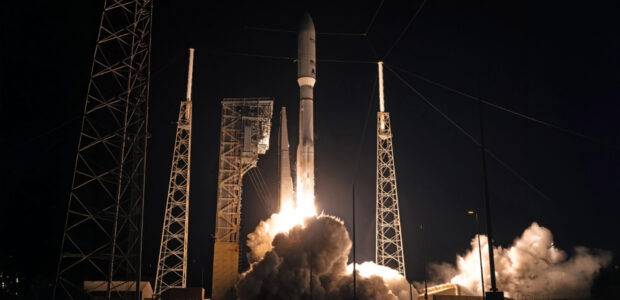

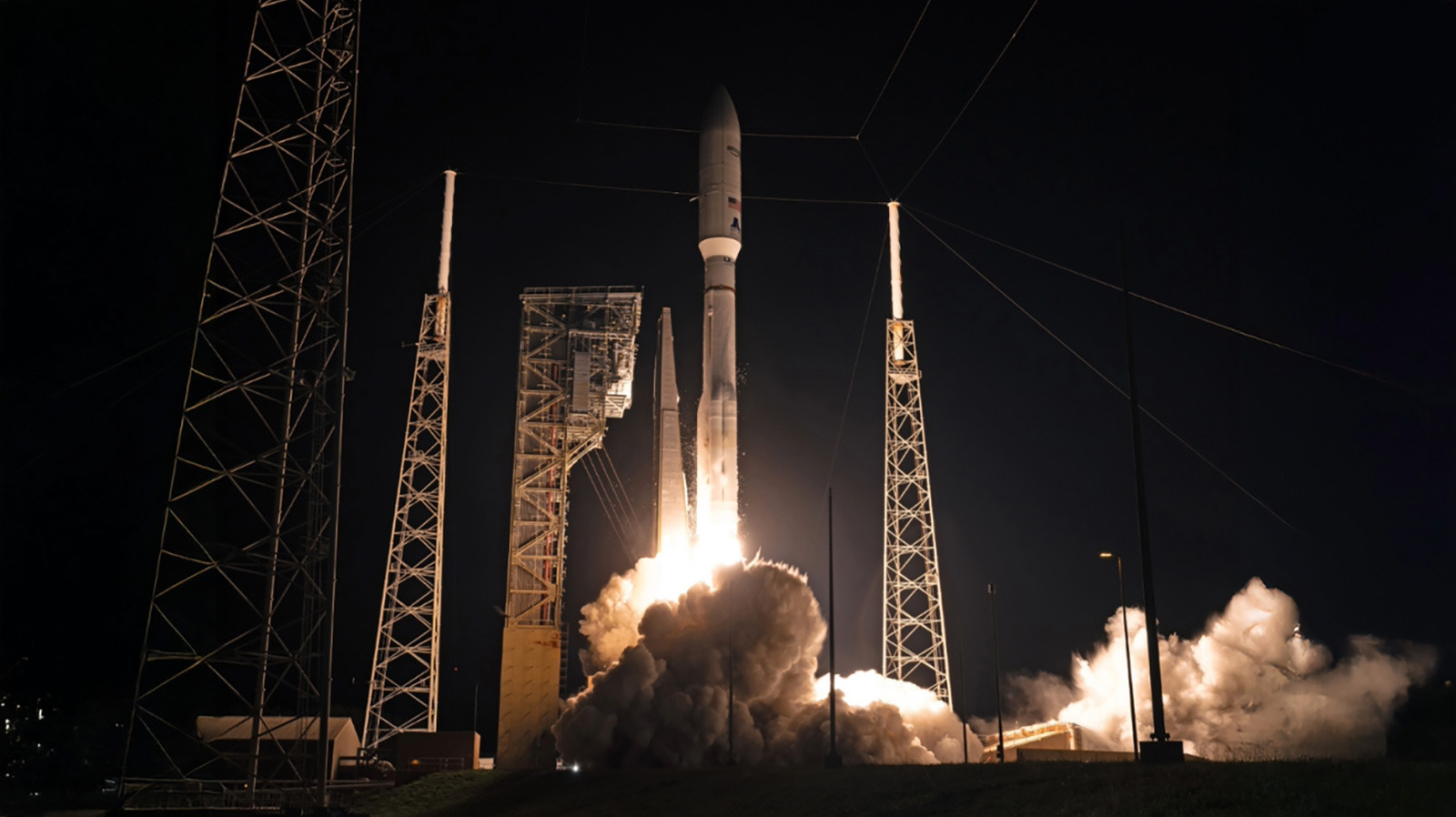
A United Launch Alliance (ULA) Atlas V rocket left for space in the early hours of July 2, bringing 29 Amazon Leo satellites with it. Amazon says the rocket has successfully deployed the satellites and that it has already established contact with them in orbit, as well as ensured that they were in working condition. All that remains is raising the satellites to their assigned operational altitude of 392 miles, after which, Leo will be ready to begin providing customers access to its satellite broadband service.
This ULA launch, which took off from Florida’s Cape Canaveral Space Force Station, brings the total number of operational Leo satellites to over 390. That’s “enough to support continuous service across initial latitudes,” said Amazon Leo VP Chris Weber. After putting 224 Leo satellites in space, this is the Atlas V’s rocket last mission for the project, as well. The next Leo mission will be using ULA’s heavy-lift Vulcan vehicle, which can carry more than 40 satellites for every launch and can fly more frequently, allowing Amazon to expand the service’s coverage and capacity more quickly.
Last few launches were big for @AmazonLeo – bringing us to 390+ satellites deployed, enough to support continuous service across initial latitudes.
Still lots of work ahead – including raising all these new satellites to their assigned altitude – but we’ve completed enough… pic.twitter.com/UZb404fXRq
— Chris Weber (@Weber44Chris) July 2, 2026
“With hundreds of flight-ready satellites standing by at the Cape and a new, dedicated vertical integration facility ready to support Leo Vulcan 1 and subsequent missions, we have a clear path to increase launch and deployment cadence, helping us quickly expand network coverage following an initial service rollout later this year,” said Melissa Wuerl, Amazon Leo Director of Launch Systems.
Of course, with only 390 or so satellites in space, Leo still has a monumental to climb to be able to catch up to Starlink. SpaceX’s Starlink, after all, has more than 10,000 satellites currently providing its customers’ satellite broadband needs. In addition to launching satellites on ULA’s Vulcan rockets, Amazon also plans to use Blue Origin’s New Glenn vehicle, which can carry more than 48 satellites at once. New Glenn’s launchpad exploded during a hotfire test in May, delaying all missions that were planning to use the rocket. But Blue Origin, which was also founded by Jeff Bezos, has been building a new launchpad in earnest, so that it can launch New Glenn flights by the end of the year.
Amazon